Announcing Project adiuvabo
Starting work on Adiuvabo
For the past few weeks, I’ve been putting together the groundwork for a new project called Adiuvabo. It’s an engineering project focused on educational technology, but we're approaching a familiar problem from a completely different angle.
Usually, conditions like dyslexia are treated as medical or purely educational challenges. I want to look at it as a system bottleneck.
When a student with dyslexia reads, their brain is doing a massive amount of extra processing just to parse the text on the page. It's a heavy cognitive load. Most current educational tools don't actually fix the real-time visual friction between the reader and the text itself.
So, instead of trying to "fix" the reader with medical interventions, we are treating this as a hardware and software engineering challenge. What if we could offload that cognitive burden to a computer?
The core idea is to turn static text into an adaptable computational interface. We are exploring a few specific technologies to make this happen:
-
Algorithmic Spacing: We're writing rendering logic that dynamically changes typography, letter spacing, and visual weight to process the syntax of a sentence just before you actually read it.
-
Spatial Computing (AR): Instead of just doing this on a screen, we want to use Augmented Reality to overlay these visual modifications directly onto physical books or papers in the user's field of view.
-
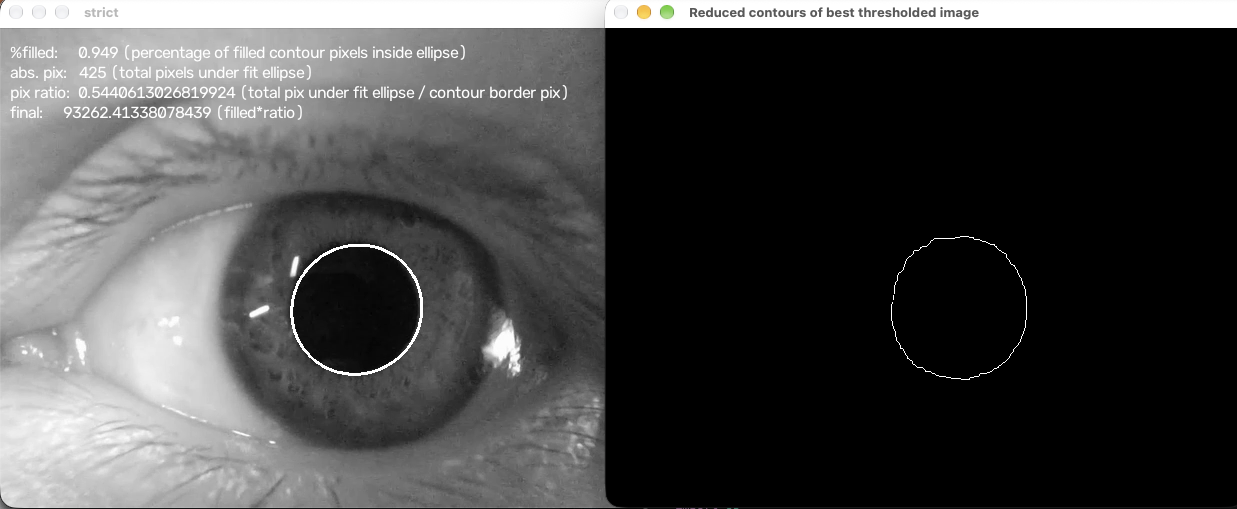
Eye-Tracking Integration: By syncing this up with ocular tracking, the system can theoretically update the text exactly where your eye is focused, blurring or modifying peripheral noise so the brain has less useless data to process.
Right now, Adiuvabo is very much an early-stage R&D prototype. I’m working alongside Luca Cojocaru and Robert van Eldik, and we are currently in the thick of our first engineering sprints. We're defining our hardware limits, writing the core math for the spatial modifications, and trying to get our rendering speeds fast enough to avoid any lag.
It’s a massive technical challenge, but if we can get the latency down and the hardware right, it could really change how we think about accessibility in education.
I’ll be posting more updates here as we start assembling the actual prototype and moving into user testing.
You will be able to see progress on our website: adiuvabo.com
— Melle Koot Lead Systems Engineer, Adiuvabo